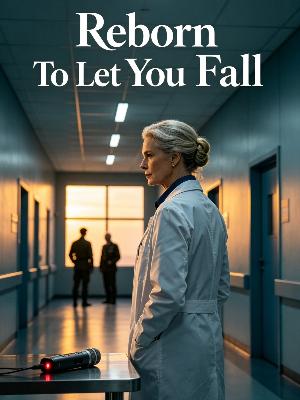


In my past life, I stopped my son from donating bone marrow to his high school sweetheart.
I knew he was on the verge of entering the military academy’s most elite special-tactics program. I also knew his blood coagulation levels had always hovered dangerously near the clinical line.
Without a matching donor, the girl passed away ten days later.
Afterward, my son’s military career soared. He became the highest-ranking, most decorated young officer in the entire base housing community—the pride of every family on the block.
And he hated me every single day of his life.
My husband called me a toxic control freak, claiming my suffocating "maternal love" had destroyed our son’s purest, purest romance. My in-laws insisted I was a cold-blooded murderer who deserved to die alone.
In my final years, I fell gravely ill and needed an immediate emergency surgery. A family member’s signature was required on the consent form. My son stood right at the doorway of my hospital room, refusing to even pull back the privacy curtain.
He simply sent a message through the nurse: "Harper begged you back then, too."
When I opened my eyes again, I was back on the exact day he submitted his voluntary donor application.
He was wearing his crisp military academy service uniform. His eyes were bloodshot, his voice tight with desperation: "Mom, this time, don't you dare stop me."
I looked at him. Then I looked past his shoulder at pale, frail Harper Ward sitting in her wheelchair.
This time, I didn't tear up the application form. I didn't cry.
I simply placed a digital voice recorder on the conference table, set up my camera on a tripod, and asked in a calm, steady voice:
"Ethan, are you certain you want to hear every single medical risk, sign the waivers, and never push the consequences onto me again?"
1
The consultation room at the Military General Hospital’s Blood and Marrow Transplant Center was suffocatingly narrow.
A stack of medical release forms sat on the laminate table. Right on top was Ethan’s voluntary donor consent application.
In my past life, inside this exact room, I had lunged forward and ripped that piece of paper to shreds.
I had screamed at him: “You can't donate! Your coagulation metrics are unstable, and your high-altitude tactical selection is next month! If your blood count fluctuates after mobilization, the flight surgeon will disqualify you on the spot!”
I had spoken too fast, my voice laced with the sharp, commanding panic of a mother. Ethan’s eyes had flushed red with instant hatred.
Harper was lying in the isolation ward next door, and her parents were kneeling in the hallway, sobbing for mercy. In the end, the academy suspended Ethan’s off-base leave, and the harvest never happened.
After Harper died, everyone remembered only that single moment. They said I was a monster disguised as a mother.
They forgot that what I had shielded wasn't just my son’s impulsive hero complex—it was fifteen years of a flawless, golden military career.
No one ever thanked me.
Now, the moment I walked into the room, Mrs. Ward instantly stepped in front of Ethan, shielding him like a mother hen.
"Evelyn Hayes, what are you trying to do now?" she spat, tears streaming down her face. "My daughter is dying!"
My husband, Colonel Arthur Hayes, sat at the head of the table, his face as dark and severe as a court-martial judge.
"Evelyn, Ethan is twenty-three years old. He’s an adult. Saving a life is his choice, and it’s the kind of honor expected of a officer's family."
I almost laughed out loud.
In my past life, Arthur knew the career risks just as well as I did. But after Harper died, he shoved every ounce of guilt onto my shoulders. He wanted the prestige of our son’s brilliant military rank, but he was too cowardly to admit he had felt a secret sigh of relief when the donation was canceled.
Ethan glared at me, his jaw set, his voice tight. "Mom, Harper can't hold on much longer. Every match in the national registry failed. I’m her only shot."
A nurse pushed Harper to the doorway in a wheelchair. She wore a surgical mask, her pale face slick with tears.
"Mrs. Hayes... please don't blame Ethan. It’s my fault... I shouldn't be a burden to him."
Ethan immediately rushed to her side, gripping her thin, trembling hand. "Don't say that, Harper. Never say that."
Mr. Ward wiped his eyes with a handkerchief. "Dr. Hayes, you’re a military medical consultant. You know better than anyone how precious a human life is. Please... don't be so selfish."
Everyone in the room waited for me to lose my mind.
They waited for me to pull rank, to cite medical codes, to use my maternal authority to crush Ethan’s heroic sacrifice. They waited so that when the dust settled, they could pin the blame squarely on my back once again.
I didn't give them the satisfaction.
I reached into my leather tote bag, pulled out a compact video camera, and mounted it on a small tabletop tripod. Then I slid a digital voice recorder directly to the center of the table.
Arthur’s eyebrows pulled together in a deep scowl. "What the hell is this, Evelyn?"
"Documenting the process," I said, my voice dropping into an icy, unshakeable register as I sat down. "Unedited, raw footage. Just so no one claims down the road that I forced him to donate—or that I failed my duty of informed consent as a medical professional."
Mrs. Ward’s face turned pale, then red. "We’re here to save a dying girl, and you’re sitting here calculating legal liability?!"
"I’m not calculating," I looked her straight in the eye. "I’m simply making sure every adult in this room takes full, permanent responsibility for the words coming out of their mouths today."
Dr. Porter, the chief of hematology sitting beside us, adjusted his glasses. "Dr. Hayes, the hospital will keep an official transcript of this meeting."
"I know, Dr. Porter," I nodded calmly. "But this involves a candidate undergoing high-level military academy clearance. Keeping an independent record doesn't violate ethics protocols, does it?"
Dr. Porter went quiet for two seconds. "As long as all parties consent to being recorded, it is permissible."
Ethan looked at me with pure, unadulterated disgust. "Mom, you genuinely make me sick."
In my past life, those words would have cut me to the quick. I would have wept, explained, and begged him to understand my love.
Not anymore.
I opened the formal medical disclosure folder. "Feeling sick is fine, Ethan. Before you sign, answer my questions on camera."